5 Major Misconceptions About Colored Speckles —— Even Experienced Formulators Get These Wrong
As a manufacturer of colored speckles, we often hear frustrated questions: “Why are my speckles bleeding in the soap base?” or “I added a lot of speckles but they don’t show up well.” After talking with customers, we realized that many of these issues come from common misunderstandings about how speckles work. Today, we’re clearing up five of the most persistent myths – some of which even catch experienced formulators off guard.
Myth #1: Bigger Speckles Always Give Better Visual Effects
Truth: Particle size is a trade-off between visibility and processability.
Too large (>3 mm): Large speckles tend to sink in liquid or semi-fluid bases, causing uneven distribution. They can also clog nozzles in pump type packaging.
Too small (<0.5 mm): Tiny speckles may be mistaken for impurities or bubbles, and their visual impact is weak.
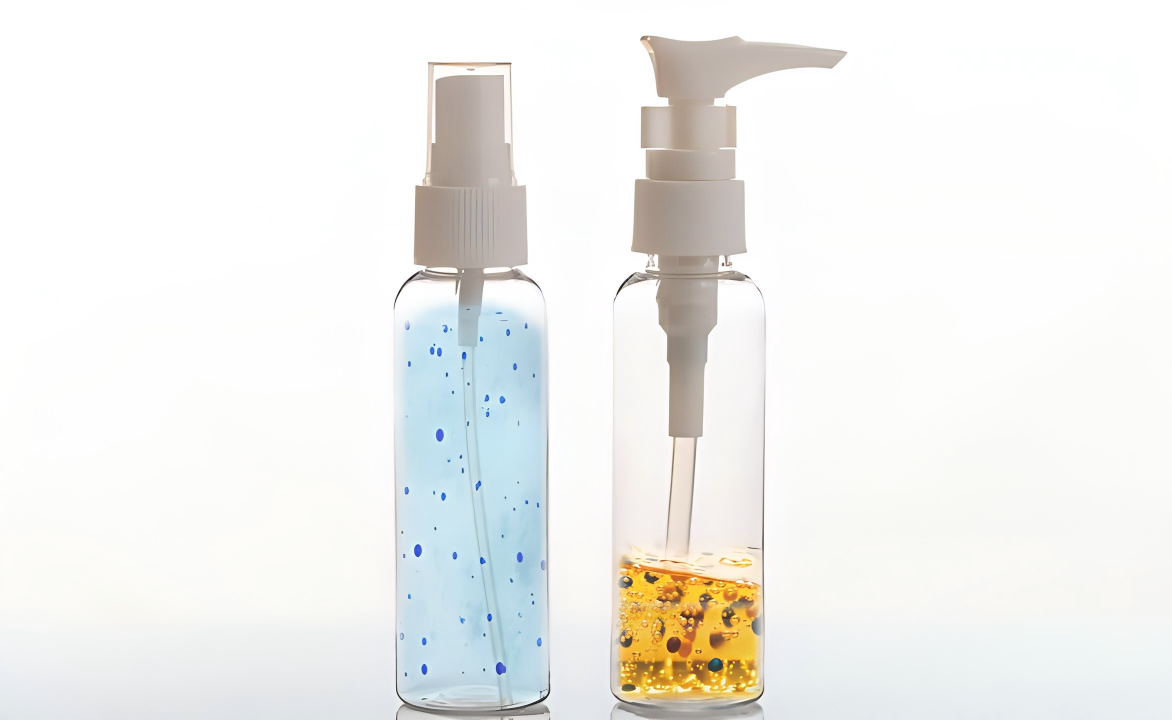
Our recommendation: For most applications – soap, bath salts, facial cleansers – the optimal range is 1.5–2.5 mm. This size is clearly visible without affecting production equipment or user experience.
We offer custom particle sizing and can recommend the ideal size based on your base viscosity and filling method.
Myth #2: Natural Colored Speckles Are Always Better Than Synthetic Ones
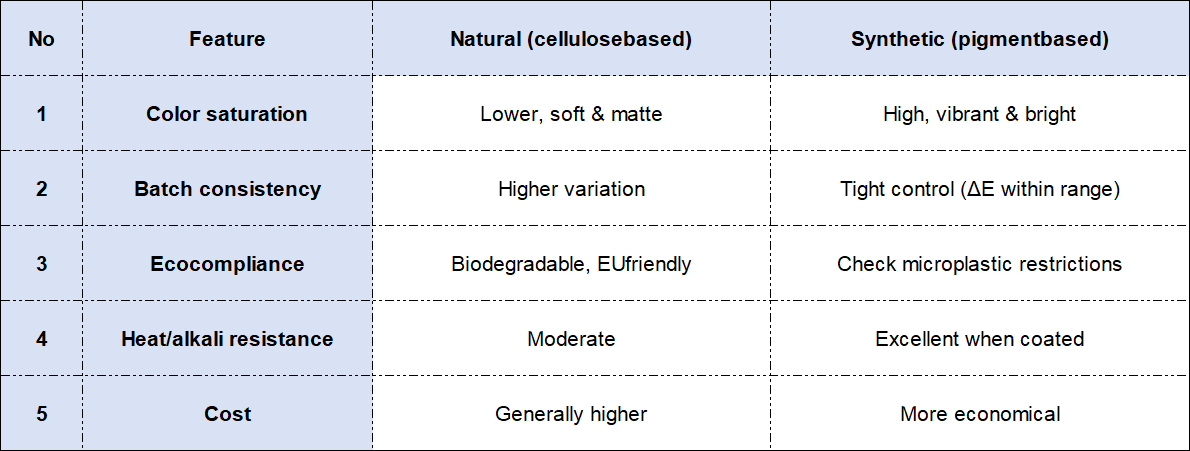
Truth: “Natural” does not automatically mean “better.” The right choice depends on your product positioning and target market.
Our recommendation
For European eco-conscious brands, natural speckles are a great fit.
For vibrant colors and stable mass production, high-quality synthetic speckles are better.We supply both natural cellulose speckles and high performance coated synthetic speckles, and we can help you compare samples based on your target market.
Myth #3: All Colored Speckles Are Alkali-Resistant
Truth: This is the most overlooked misconception – and the #1 cause of customer complaints.
Many low-cost speckles use dyes instead of pigments. Dyes can fade, migrate, or disappear within weeks or even days in environments with pH > 8.5. But handmade soaps, transparent soaps, and laundry powders often have a pH of 9–11.
Our lab data
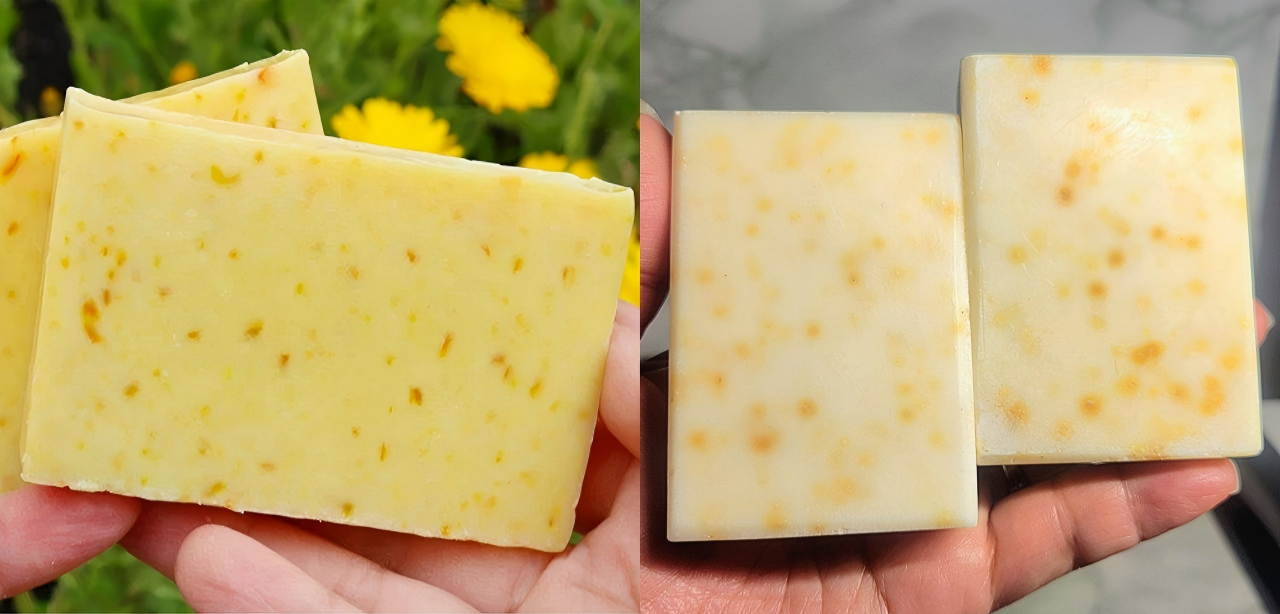
Standard dye-based speckles: visible fading after 7 days in a pH=10 soap base, almost gone after 30 days.
Our alkali-resistant coated pigment speckles: after 3 months under the same conditions, color difference ΔE < 2 (virtually no change).
Always ask your supplier for alkali resistance test reports. Our batches come with detailed TDS and stability data.
Myth #4: The More Speckles You Add, The More Visible They Become
Truth: Less is often more. Overloading speckles makes the product look messy and unappealing.
Based on customer feedback and our own trials:
<0.3% addition: Too sparse, weak visual presence.
0.5% – 1.5% addition: Optimal range – gives a “starry sky” or “micro-texture” look.
>2% addition: Overcrowded – colors interfere with each other, creating a muddy, dirty appearance that customers may associate with defects.
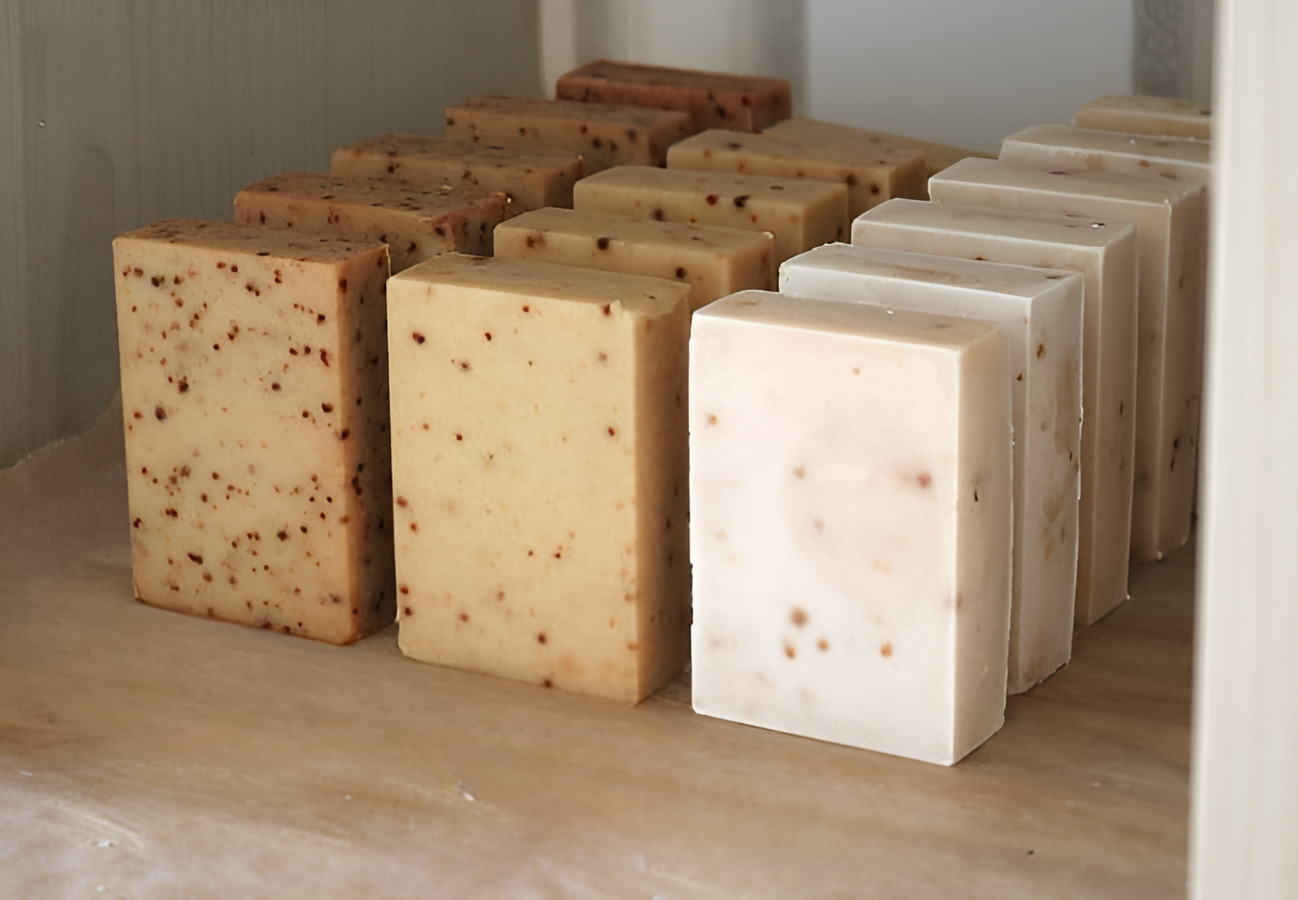
Our recommendation: Start with 0.8% and run gradient tests. Find the ideal ratio for your base color and transparency.
We can pre-test the optimal addition rate in our lab using your base sample – saving you from trial-and-error on your production line.
Myth #5: Any Supplier Is Fine As Long As The Color Matches
Truth: Color is just the entry ticket. Particle size distribution, hardness, dispersibility, and batch consistency are the hidden variables that truly affect your production efficiency and final product quality.
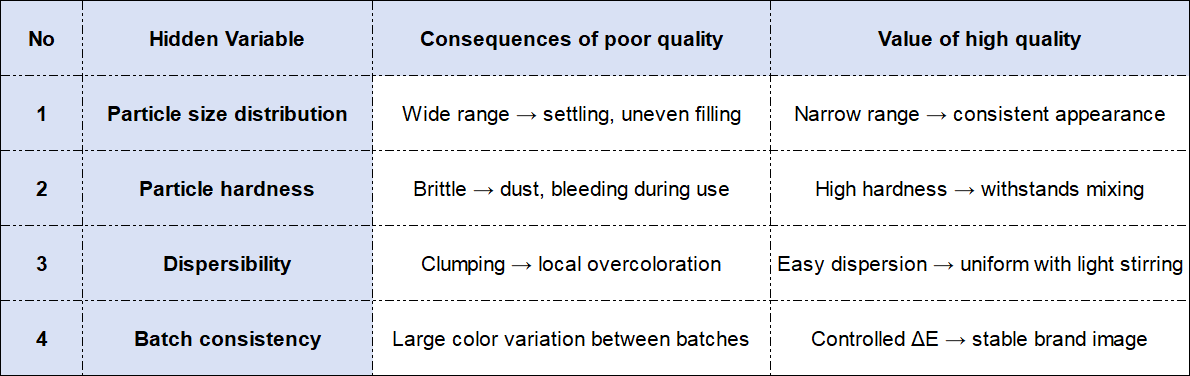
Our recommendation: When evaluating suppliers, don’t just look at color swatches. Ask for:
Particle Size Distribution (PSD) chart
Hardness test data
Color difference report across three consecutive batches
All our products are manufactured under ISO 9001 quality control. We retain samples from every batch and provide complete test reports – so you can be confident that every bag of speckles you receive is consistent and reliable.
Conclusion
Colored speckles may be small, but they have a big impact on your product’s visual appeal and production stability. Avoiding these five common misconceptions will help you:
Reduce manufacturing issues
Improve product aesthetics
Lower customer complaints
Build a consistent brand image
Want to dive deeper into our colored speckle technology and alkali resistance test data?
Contact our technical team today to request a detailed Technical Data Sheet (TDS) and our alkali resistance test report. We can also provide one on one application advice based on your specific formulation – helping you select the ideal particle size, color, and addition rate for your product.