Water Treatment Industry — Soda Ash & Sodium Bicarbonate Solutions
YRC supplies sodium bicarbonate and soda ash for municipal and industrial water treatment. These chemicals support pH regulation, heavy-metal precipitation, water softening, and stable discharge compliance.
RELATED PRODUCTS
Sodium Bicarbonate
Sodium bicarbonate is a mild alkaline chemical used for controlled pH adjustment in acidic wastewater treatment.

Specific Scenario
Neutralizes acidic wastewater from electroplating and dyeing processes. Its mild alkalinity supports safe, controlled pH adjustment, minimizes corrosion, and helps achieve stable, compliant discharge.
Product Function
Its weak alkalinity enables gradual and uniform pH adjustment toward neutral, reducing the risk of localized alkaline hotspots associated with stronger bases. The mild reaction minimizes corrosion to treatment equipment, supports operational safety, and lowers long-term maintenance costs.
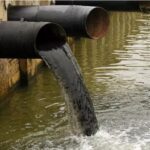
Industrial Wastewater pH Neutralization
Applicable Scenarios
Soda ash is used to neutralize acidic industrial wastewater (pH ≤ 5) from sectors such as electroplating, printing and dyeing, and chemical manufacturing.
Application Advantages
Soda ash provides moderate alkalinity and gradual pH adjustment, reducing pH fluctuations and the risk of localized high-pH zones that can cause heavy-metal hydroxide precipitation and encapsulation. It is also cost-effective for large-scale wastewater treatment.
Soda Ash Light
Soda ash is used to neutralize acidic industrial wastewater and to soften water by precipitating calcium and magnesium ions.
Soda Ash Dense
Adjusting pH value, softening water quality, and removing heavy metal ions are the basic chemicals for industrial wastewater and municipal sewage treatment.
Water Softening

Applicable Scenarios
Soda ash is suitable for industrial circulating water pre-treatment and municipal water softening in hard-water areas. By precipitating calcium and magnesium ions, it helps prevent scaling, improve heating efficiency, reduce maintenance costs, and provide an economical solution for industrial and public water treatment.
Soda Ash Light vs. Soda Ash Dense for Water Treatment
Soda Ash Dense is suitable for continuous softening systems due to its coarser particles and slower dissolution, typically with controlled stirring in a reaction tank. Soda Ash Light dissolves quickly and is suitable for intermittent softening equipment, such as small circulating water filtration systems.
FAQ
Selecting Soda Ash
It is necessary to quickly and significantly increase the pH value (for example, neutralize strongly acidic wastewater, meet the pH requirements for discharge, and promote the precipitation of metal hydroxides (excluding heavy metals)).
We need to use carbonate ions for chemical precipitation softening.
It is necessary to simultaneously increase the pH and total alkalinity, and allow the pH to rise higher.
Choose Sodium Bicarbonate
Need to gently and accurately increase or stabilize pH to avoid excessively high pH.
The main goal is to supplement and maintain alkalinity/buffering capacity, without causing drastic changes in pH.
Dealing with weakly acidic conditions or situations that require buffering.
As a neutralizing agent after dechlorination.
Yes, they are often used in conjunction for precise water chemistry control. A common strategy is to use Soda Ash for the initial significant pH adjustment and then use Sodium Bicarbonate to “lock in” the new pH level by building up alkalinity, making the system more resistant to pH fluctuations.
Dosage depends on the specific water chemistry, including the initial and target pH/alkalinity, and the concentration of contaminants like calcium. It is highly recommended to conduct jar tests on a water sample to determine the optimal dosage. Our technical team can provide guidance and standard calculation formulas based on your water analysis report.
Absolutely. Both Soda Ash and Sodium Bicarbonate are approved for use in drinking water treatment by major regulatory bodies like NSF/ANSI Standard 60 when the products are manufactured to the required specifications. Be sure to specify to your supplier that you need the NSF-certified grade for potable water applications.
Have a specific technical question? Contact our experts today for a consultation.