
Textile Printing & Dyeing Industry — Soda Ash Light & Anhydrous Sodium Sulfate Solutions
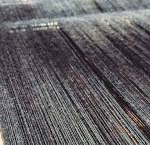
The textile printing and dyeing industry requires chemicals that support uniform dye distribution, vibrant coloration, and superior color fastness, along with auxiliary agents that facilitate dyeing and finishing. These requirements are essential for consistent appearance and durability in finished textiles.
RELATED PRODUCTS
Soda Ash Light
Soda Ash Light provides strong alkalinity, adjusts pH, softens water, and participates in chemical reactions in textile preparation.

Application Scenarios
Soda Ash Light desizes cotton fabrics by removing starch size, preparing them for dyeing and supporting even color absorption. Its high alkalinity and fast dissolution make it suitable for desizing baths.
Product Function & Value
Soda Ash Light creates an alkaline environment that causes starch size to swell and hydrolyze, allowing removal through subsequent washing. Its high solubility supports rapid and uniform dissolution in the desizing bath, helping maintain consistent concentration and processing stability. This improves desizing effectiveness and preparation quality for dyeing.

Application Scenarios
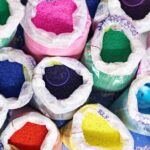
Anhydrous Sodium Sulfate is used in reactive dyeing of cotton and linen to promote dye absorption, improve color fastness, and support uniform results. Its purity helps maintain consistently vibrant coloration.
Product Function & Value
Anhydrous Sodium Sulfate improves cost-effectiveness in printing and dyeing by increasing dye uptake, which can reduce dye consumption, particularly in high-concentration dyeing of dark shades such as black and navy blue. It supports color fastness and vibrant results while helping lower operational costs without compromising quality.
Read our expert analysis on achieving level dyeing with anhydrous sodium sulfate.
Anhydrous sodium sulfate
Anhydrous Sodium Sulfate acts as a dye promoter. It improves dye adsorption on fibers by reducing dye solubility and promoting dye transfer to the fiber, reducing dye waste and enhancing dyeing uniformity.
FAQ
Neutralize the negative charges on the surface of fibers, reduce the repulsion between dyes and fibers, and improve the dye uptake rate
Risk of one-time addition: pH sudden rise>11.5
Correct operation: Add in 3 times, with a 10 minute interval between each time, and control the pH between 10.5-11.0.
The primary difference is bulk density and particle size. Soda Ash Light has a lower density and finer particles, which gives it a much higher dissolution rate. This is critical in dyeing, as it allows for quick and even distribution in the dye bath, preventing spotting and ensuring uniform pH, which leads to consistent, level dyeing.
By controlling the rate of dye exhaustion. Without an exhausting agent, the dye might attach to the fiber too quickly, leading to uneven coloring (especially on folds or dense fabrics). Anhydrous Sodium Sulfate allows for a more gradual and controlled transfer of dye from the bath to the fiber, resulting in a smooth, level shade.
High purity (≥99%) is essential to avoid side reactions and impurities that can cause:
Spots and Specks: Undissolved impurities from low-grade chemicals can land on fabric.
Inconsistent Results: Varying purity levels lead to unpredictable pH or exhaustion rates.
Metallic Ions: Impurities can complex with dyes, altering the final shade or reducing color fastness.
Have a specific technical question? Contact our experts today for a consultation.
