
Glass Industry — Soda Ash Dense & Anhydrous Sodium Sulfate Solutions
High-quality glass starts with consistent raw materials. In flat and specialty glass manufacturing, Soda Ash Dense acts as a flux that helps reduce melting energy, while Anhydrous Sodium Sulfate supports melt refining and helps improve clarity and homogeneity.
RELATED PRODUCTS
Soda Ash Dense
Soda Ash Dense provides large particles, high bulk density, and good flowability when mixed with quartz sand, limestone, and other batch materials. It supports stable melting reactions, helps reduce bubbles, and contributes to glass flatness.
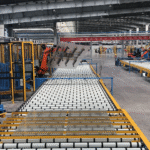
Application Scenarios
Soda Ash Dense is used as a key flux in glass production. It helps lower batch melting temperatures, improve energy efficiency, and support clarity and consistency in flat glass and specialty glass applications.
Product Function & Value
Soda Ash Dense helps reduce the melting temperature of glass batches by approximately 50–100 °C, depending on batch composition, which can lower energy consumption during production. It also supports stable melting and batch uniformity. For large-scale continuous production, such as high-capacity glass lines, its chemical consistency and controlled reactivity help reduce raw material loss, improve batch uniformity, and support higher glass yield. This contributes to cost-efficient and more sustainable manufacturing.

Application Scenarios
Anhydrous Sodium Sulfate is used as a refining agent in optical glass and microcrystalline glass production. It helps remove micro-bubbles, improve melt homogeneity, and support overall product quality.
Product Function & Value
As a refining agent, Anhydrous Sodium Sulfate supports the removal of fine bubbles from the glass melt and improves melt homogeneity. This helps reduce bubble-related defects and supports transparency and consistency in specialty glass production.
Sodium Sulphate Anhydrous
Anhydrous Sodium Sulfate is a white crystalline solid with high water solubility and hygroscopicity. It has a melting point of approximately 884 °C and a relative density of approximately 2.68.
FAQ
Clarifier: Improve the transparency and uniformity of glass
Flux: Reduce the melting temperature and viscosity of the mixture, allowing refractory materials such as silica sand to melt faster and more evenly, thereby improving the production efficiency and energy-saving effect of the melting furnace
It is essential to maintain reducing conditions in the batch. The decomposition temperature of sodium sulfate is very high (above 1200°C). Therefore, it is used in conjunction with a reducing agent, typically carbon (e.g., coke or anthracite coal). The reductant lowers the decomposition temperature, allowing the fining reaction to occur at a more optimal and efficient stage in the melting process.
Other forms, like Glauber’s Salt (Na₂SO₄·10H₂O), contain significant amounts of water of crystallization. In the furnace, this water must be evaporated, consuming large amounts of energy and potentially causing batch agglomeration or popping, which leads to unstable production and higher energy costs. Anhydrous Sodium Sulfate is more pure, stable, and ensures accurate batching and consistent melting.
Reduce fly and delamination: Soda Ash Dense particles are large, dense, and have moderate flowability, making them less likely to fly during the transportation, mixing, and feeding processes of the mixture. Soda Ash Light particles are small, have low density, and have good fluidity, which can easily generate a large amount of dust (fly material) during transportation (especially pneumatic transportation) and feeding, causing raw material loss, environmental pollution, health hazards, and leading to the separation of light and heavy components in the mix, seriously affecting the uniformity of glass composition.
Improve mixing uniformity: The particle size distribution of Soda Ash Dense is more easily matched with other raw materials, resulting in a more uniform mixing and less likely to segregate.
Yes, this is very common. Their functions are complementary: Soda Ash Dense acts as the main flux, while Anhydrous Sodium Sulfate acts as a secondary flux and the primary fining agent. The ratio between them must be scientifically designed based on the glass type, furnace melting characteristics, and desired fining results.
Yes. We are committed to sustainable manufacturing processes, minimizing energy consumption and emissions. Furthermore, our products enable the glass industry to reduce its melting temperatures, leading to lower energy consumption and a reduced carbon footprint, making them a key component in the green glass manufacturing supply chain.
Have a specific technical question? Contact our experts today for a consultation.