From Warehouse to Production Line: Proper Storage, Transport, and Handling of Colored Speckles
Have you ever received a batch of colored speckles only to find them clumped, faded, or broken? In many cases, these issues stem not from product defects, but from improper storage, transport, or handling during production.
As a professional colored speckles manufacturer, we help customers minimize material loss and achieve consistent visual results. This practical guide covers three key stages: warehouse storage, transport protection, and production addition.
1. Warehouse Storage: Moisture, Light, and Temperature Control
Colored speckles – especially natural cellulose or starch-based types – are hygroscopic. Moisture can cause clumping, poor flowability, or even microbial growth.
Recommended practices
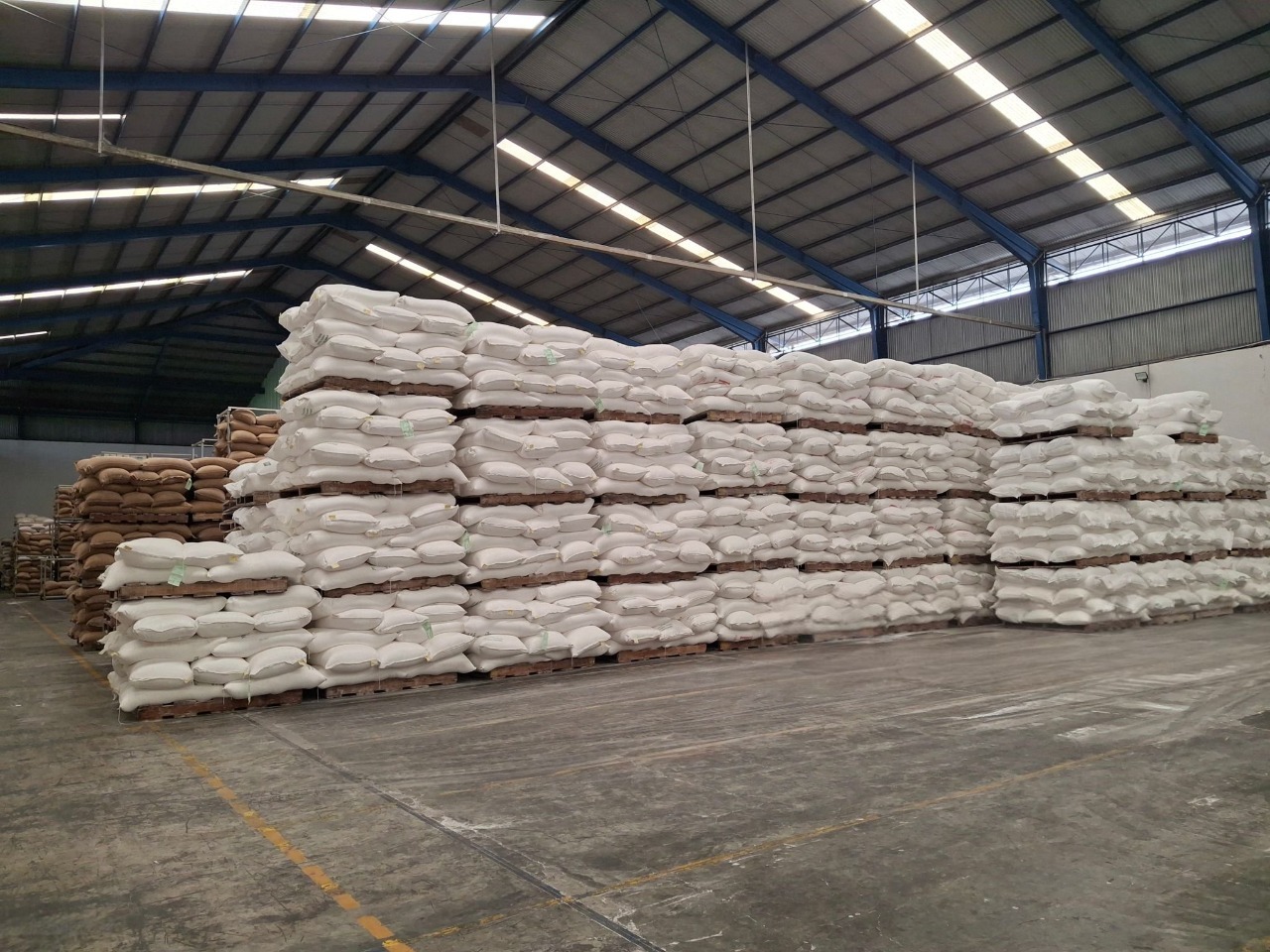
Keep in original sealed bags: Do not open until ready to use. Reseal tightly after opening.
Ideal conditions: Warehouse temperature: 15–25°C, relative humidity ≤ 50%. Store on pallets or shelves, away from walls, floors, and windows.
FIFO inventory: Use older stock first. Shelf life is typically 12–18 months.
Separate storage: Store different colors and particle sizes separately to avoid cross-contamination.
Common mistakes
Leaving bags open overnight in a humid production area (e.g., soap-making room).
Stacking more than 5 layers high – bottom layers may crush.
Storing near volatile chemicals (fragrances, acids) which can cause adsorption or discoloration.
2. Transport Protection: Minimizing Physical Damage and Climatic Shock
During long-distance sea or road freight, temperature fluctuations and humidity inside containers can cause irreversible damage. Proper colored speckles transport is essential.
Recommended practices
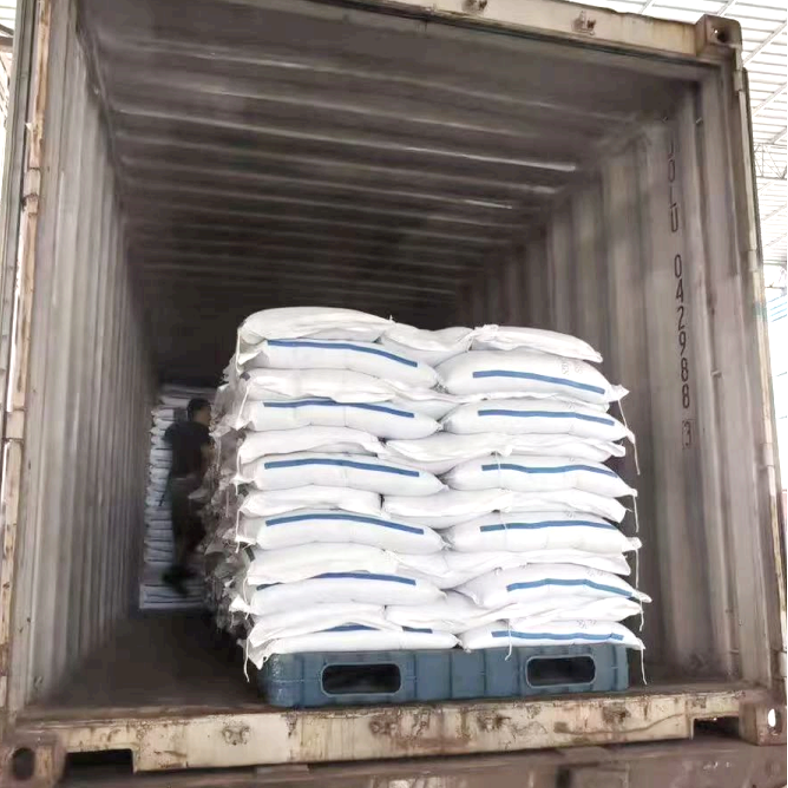
Packaging requirements: Use inner aluminum foil or high-barrier plastic bags, plus outer cartons/woven bags. Our export packaging passes vibration and drop tests.
Stacking limit: Maximum 5 layers, with cushioning material (e.g., corrugated board) between layers.
Container inspection: Ensure the container is dry, odor-free, and rust-free. Avoid co-loading with fertilizers or strong-smelling goods.
Humidity indicator cards: Place inside packages for moisture-sensitive speckles (color changes when humidity >60%).
Common mistakes
Over-stacking to save freight costs, causing broken bags and leakage.
No waterproof covers or moisture-proof pallets during rainy season shipping.
Failing to inspect immediately upon receipt – you may miss the window to claim compensation.
3. Production Addition: Precise Control of Temperature, Timing, and Mixing
How you add colored speckles into your base product (soap base, bath salt, detergent powder) directly affects the final effect. Correct handling colored speckles prevents defects.
Recommended practices
Addition temperature: Most speckles withstand up to 60°C. For hot-pour processes, cool base to 55–60°C before adding.
Timing: Add speckles after mixing, fragrance, and color adjustment – as the last step.
Mixing method: Use low-speed spiral stirring or manual folding for 30–60 seconds. Avoid high-shear homogenizers.
Addition ratio: Recommended dosage: 0.5% – 1.5% (by weight). Run a small trial first.
Equipment protection: Verify speckle size is larger than filter mesh. Remove filters before adding, or choose micro-speckles (≤1mm).
Common mistakes
Adding speckles into a hot base above 80°C – they dissolve or change color.
Using a high-shear homogenizer – crushes speckles into powder.
Dumping all at once – causes agglomeration. Sprinkle slowly into the liquid vortex.
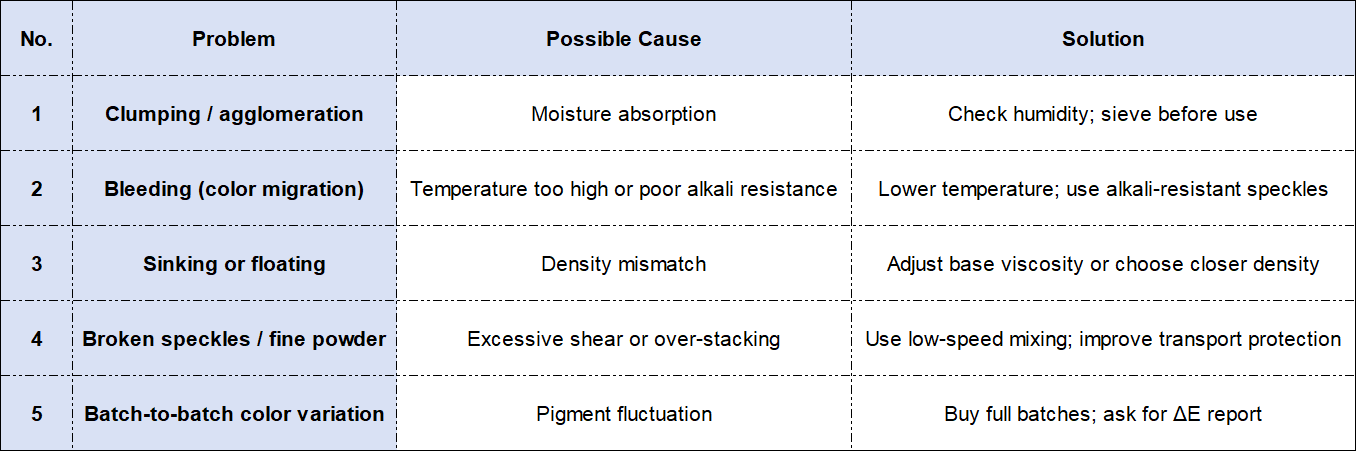
4. Quick Troubleshooting Table
5. Our Service Commitment
Every batch of our colored speckles comes with:
TDS (Technical Data Sheet): Particle size distribution, heat resistance, density, and more.
Storage label: Bilingual (English/Chinese) warnings for moisture, sunlight, and stacking limits.
Sample support: Free samples for pre-purchase testing.
Technical support: Remote or on-site guidance from our application engineers.

Conclusion
Proper logistics and storage management not only extend the shelf life of colored speckles but also ensure every batch of your finished product has a consistent, beautiful visual effect. Review your warehouse conditions and production procedures today – let these tiny speckles become the highlight of your product.
Have questions or need customized storage advice? Contact us for free technical consultation.